Minimally Invasive Heart Surgery

Less invasive approaches have transformed surgery in many medical fields. Smaller incisions translate to less blood loss, less post-operative discomfort, shorter hospital stays, a quicker recovery, and a generally speedier return to normal activities.
Recognizing the value of these benefits, Department of Cardiothoracic surgery heart surgeons offer minimally invasive surgery to patients who are candidates for these approaches. Minimally invasive procedures include:
© Heart Valve Society of America 2012
- Percutaneous valve surgery: Percutaneous valve repair or replacement is a minimally invasive approach that uses a catheter to repair or replace a diseased valve by threading a catheter up to the heart through a blood vessel in the groin. We are able to use this approach to replace mitral and aortic valves. Weil Cornell surgeons were leaders in clinical trials establishing the effectiveness of this technique.
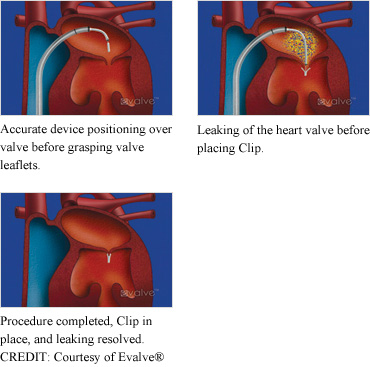
- Endovascular stent placement for aortic aneurysms: For patients who are not able to have traditional open surgery, we offer endovascular stent grafting for aneurysm repair. Surgeons thread a catheter into the aorta through a blood vessel in the patient's groin. A stent is guided through the catheter and placed at the site of the aneurysm, where it opens up and acts as a scaffold to support the walls of the aorta. The aneurysm gradually shrinks over time. Because of our experience in this area, Weill Cornell was chosen as one of only two centers in the New York metropolitan area to use a new FDA-approved device which allows for more rapid recovery and an earlier return to normal daily activities in select patients.
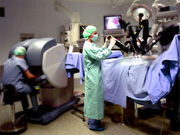 Coronary artery bypass graft (CABG): The surgeon performs this procedure through a small (2-3 inch) incision between the ribs. We are able to conduct this operation using a specialized surgical robot and heart stabilizer developed by Weill Cornell surgeons. Some patients may have "off-pump" beating heart surgery that can be accomplished without the need for a heart-lung machine. In select cases, CABG can be performed using a surgical robot, which requires three or four pencil-sized incisions.